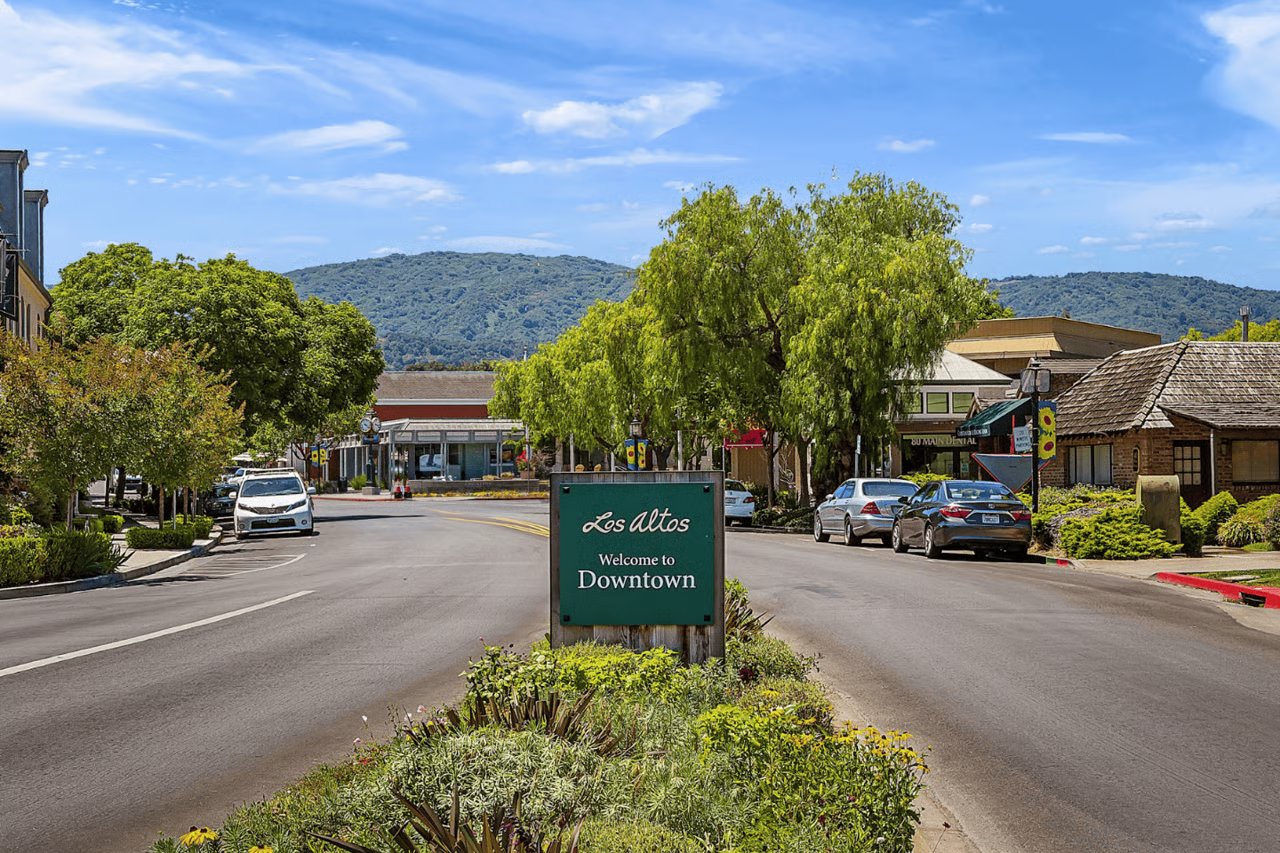
Most sellers on the Peninsula have done this before, or watched neighbors do it, and still get one thing backwards: they think the sale happens at the offer table. It doesn't. In Palo Alto, Los Altos, Menlo Park, Atherton, and Los Gatos, the outcome is largely decided before the first buyer walks through — by how the home was prepared, how it was priced, and how the first two weeks were run. This is a plain-English guide to those three decisions.
1. Understand what you're actually selling
Luxury buyers here are unusually analytical. They're engineers, founders, and investors who will pull the permit history, check the school boundary, read the lot dimensions, and ask what the setbacks allow before they ask about the kitchen. So the first job is to know your own asset the way they will:
- Lot and zoning. Lot size, shape, and zoning district determine what a buyer can build or add. On the Peninsula, a flat, regular lot in a district that permits an ADU or second story is often worth more than the house sitting on it.
- Permit history. Unpermitted work is one of the most common reasons an offer gets renegotiated. Pull the city's records before listing, not after inspection.
- Systems and structure. Roof, foundation, drainage, sewer lateral, electrical panel. These are what a buyer's inspector will write about, so you want to know first.
- Location within the town. Every Peninsula city has micro-markets. The same house on two streets a half-mile apart can trade at meaningfully different prices. Pricing off the town average is how sellers leave money on the table — or sit unsold.
2. Preparation: what moves the number, and what doesn't
Preparation is not the same as renovation. Big pre-sale remodels rarely return their cost in this market because luxury buyers tend to have their own plans, and a fresh kitchen in someone else's taste is a liability, not a feature. What reliably helps is removing the reasons to hesitate:
- Pre-listing inspections. A property inspection, pest report, roof and sewer inspections, and where relevant a foundation or drainage report. Sharing them up front lets buyers write cleaner offers and removes the discount they'd otherwise build in for uncertainty.
- Deferred maintenance. Fix what the inspection surfaces if it's cheap relative to the anxiety it removes. Buyers overweight small visible problems.
- Staging and presentation. Professional staging, landscaping refresh, and photography that respects the architecture. In this segment the listing is consumed first on a phone screen, often from another state or country; the imagery is the first showing.
- Paperwork. Plans, permits, warranties, HOA documents if applicable, and a clear title. Buyers moving quickly need to be able to verify quickly.
The principle: your goal is a home that a careful buyer can say yes to with confidence, not a home that looks like something it isn't.
3. Disclosures: the part sellers underestimate
California requires sellers of one-to-four-unit residential property to deliver a Transfer Disclosure Statement (TDS), a Natural Hazard Disclosure (NHD) report, and, in practice, a Seller Property Questionnaire, regardless of whether the home is sold "as-is." The TDS is completed by the seller personally — not the agent — and covers known defects across structure and systems. The NHD identifies whether the property sits in mapped flood, fire, fault, seismic, or dam-inundation zones, and is usually prepared by a third-party disclosure company.
Two practical points. First, over-disclose. Buyers in this market have a multi-year window to bring claims over undisclosed defects, and the strongest position for a seller is a file so complete there's nothing left to discover. Second, treat disclosures as part of the marketing package, not a legal afterthought: a thorough, organized disclosure set signals a well-run home and a serious seller. Disclosure law changes periodically, so confirm current requirements with your agent and, where appropriate, a real estate attorney.
4. Pricing: the market sets it, the seller chooses where to start
The single most consequential decision is the list price, and it has less to do with what you need than with how buyers will read it. On the Peninsula there are essentially two strategies:
- Price at or slightly below the expected value to invite competition. This works when the home is well-prepared, the segment is active, and there are enough qualified buyers to create a genuine multiple-offer situation. It's the strategy most Peninsula agents default to for good reason, but it only works if the preparation is real.
- Price at the top of the defensible range and hold. This suits truly scarce properties — a rare Old Palo Alto lot, an Atherton acre, a hillside view parcel — where the buyer pool is small but highly motivated and there is no comparable alternative.
What doesn't work is pricing to an aspiration and "seeing what happens." Buyers here track days-on-market and price reductions closely, and a home that sits reads as a home with a problem. Price is a signal, and the market reads it in the first few days.
5. The first two weeks
The buyers most likely to pay full value are the ones who have been searching, are pre-approved or cash-ready, and receive the alert the moment your listing goes live. That group sees your home in week one. If it isn't ready — photos, staging, disclosures, pricing — you've spent your best audience on a rough draft.
Run the launch deliberately: a coming-soon window if your local rules and MLS permit it, a full disclosure package available on day one, showings scheduled to create momentum rather than scattered access, and a clear offer date if the strategy calls for one. Off-market or private-network sales have a place on the Peninsula — for privacy, or for a specific buyer — but they trade exposure for discretion, and exposure is usually what produces the best number.
6. Timing and the bigger picture
Seasonality matters less here than in most markets, but it isn't zero: spring and early fall tend to draw the deepest buyer pools, while the holidays and late summer thin out. More important than the calendar is the capital cycle — the Peninsula's luxury demand tracks equity liquidity, and sellers who understand when buyers are getting liquid position themselves ahead of it rather than behind it.
If you own a home here and are thinking about selling in the next year or two, the most useful thing you can do now is the homework in section one. Know what you own, what it can become, and what a careful buyer will find. The rest follows.
Thinking about selling a Peninsula home?
I'll walk your property with a developer's eye and a market analyst's numbers, and give you a straight read on preparation, pricing, and timing — before you commit to anything.
Start a ConversationSources & Further Reading
California Civil Code §1102.6 — Transfer Disclosure Statement →California Civil Code §1103.2 — Natural Hazard Disclosure Statement →California Department of Real Estate →Remodel vs. Rebuild in Silicon Valley →Payne Sharpley is a Silicon Valley real estate agent with Intero | Forbes Global Properties and co-founder of Citis, a housing-entitlement intelligence platform. CA DRE #02195155. This article is general information about selling residential property in California, not legal, tax, or investment advice; disclosure requirements and local rules change, so confirm current obligations with your agent, a real estate attorney, and the relevant city or county authority. Equal Housing Opportunity.